
In a world where technology seems to advance faster than a caffeine-fueled squirrel, social robots are stepping into the spotlight. These charming mechanical companions are not just for sci-fi movies anymore; they’re becoming part of everyday life. Imagine a robot that can crack a joke, lend a listening ear, or even help with chores. Sounds like a dream, right?
But it’s not all fun and games—social robots are redefining how we interact with machines and each other. They’re designed to understand emotions, respond to social cues, and even engage in meaningful conversations. As they become more integrated into homes and workplaces, the question arises: are we ready to embrace our new robotic friends? Dive into the fascinating world of social robots and discover how they’re shaping the future of human-technology interaction.
Overview Of Social Robots
Social robots represent a significant advancement in technology, increasingly integrating into daily activities. These machines engage in human-like interactions, enhancing connections and communication.
Definition And Purpose
Social robots are interactive machines designed to assist, entertain, or support humans. They use artificial intelligence to analyze emotional responses and mimic social behaviors. Their primary purpose involves facilitating companionship, support for individuals with disabilities, and enhancing user experiences in various settings. These robots seek to improve social engagement and provide emotional comfort, leading to better human-robot relationships.
Types Of Social Robots
Several types of social robots exist, each serving different functions. Companion robots, such as Aibo or Buddy, provide emotional support and interaction. Service robots, including robots like Pepper and NAO, assist in customer service environments. Educational robots, such as LEGO Mindstorms or Bee-Bot, help teach concepts in schools. Rehabilitation robots aid in therapy for patients, promoting recovery. Each type enhances interactions, fulfilling specific social or functional roles in society.
Applications Of Social Robots
Social robots find diverse applications across various sectors, enhancing interactions and efficiency in daily tasks.
Healthcare
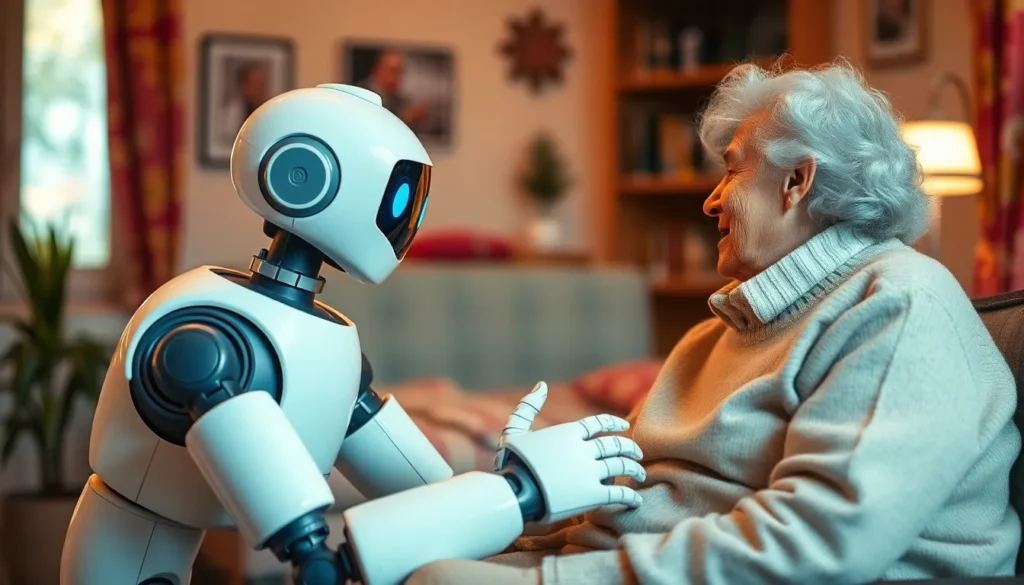
In healthcare settings, social robots provide companionship and support for patients. They assist with elderly care by reminding individuals about medication schedules, appointments, and daily activities. Additionally, these robots help reduce feelings of loneliness among seniors, promoting mental well-being. Research shows that robots like PARO can stimulate cognitive function and improve mood in dementia patients. Moreover, they facilitate therapy sessions, using engaging interactive features to keep patients attentive during rehabilitation.
Education
Educational spaces benefit significantly from social robots. They help teach children through interactive learning experiences that adapt to individual needs. Robots like LEGO Mindstorms enable students to engage in hands-on learning while developing problem-solving skills. Furthermore, social robots support special needs students by providing customized educational tools, enhancing engagement and understanding. Teachers can utilize these robots as assistants to foster classroom participation and collaboration among students.
Customer Service
In the realm of customer service, social robots streamline interactions and improve user experiences. Companies deploy robots like Pepper to greet clients, answer questions, and provide product information. These robots enhance customer engagement by offering personalized assistance based on user preferences. Data indicates that incorporating robots in service roles can increase customer satisfaction levels. Additionally, robots operate efficiently during peak hours, reducing wait times and ensuring smoother operations.
Benefits Of Social Robots
Social robots provide numerous advantages that impact personal interactions and operational efficiency.
Enhancing Human Interaction
Social robots facilitate meaningful conversations, helping users feel less isolated. They respond to emotional cues, creating a bond that fosters companionship. Engaging with social robots can encourage socialization among individuals, especially in settings such as nursing homes or schools. Empathy-driven designs enable robots to adapt to user moods, enhancing overall interaction quality. By mimicking human expressions and emotions, they offer support that can comfort users, particularly during moments of loneliness. This ability to understand and respond to emotional states has made social robots valuable companions in various environments.
Improving Efficiency
Social robots streamline routine tasks, freeing time for individuals to focus on more complex activities. These robots assist in healthcare settings by managing non-critical tasks, allowing caregivers to allocate attention to patients’ needs. In retail, they help customers navigate stores, improving overall shopping experiences. By implementing personalized assistance, robots reduce customer wait times, thereby enhancing service quality. Incorporating social robots into workplaces promotes productivity, as they can perform repetitive tasks quickly and accurately. Enhanced efficiency translates into better resource management, supporting smoother operations across various sectors.
Challenges And Concerns
Social robots present several challenges and concerns that merit careful consideration. Their integration into society raises important issues related to ethics and technology.
Ethical Considerations
Ethical dilemmas arise as social robots gain prominence in everyday interactions. Privacy concerns emerge, particularly regarding data collection and user consent. Users may unknowingly share sensitive information, leading to potential misuse. Emotional attachment to robots creates questions about authenticity and dependence. If individuals develop bonds with robots, it might alter human relationships. Additionally, safeguarding that robots do not replace vital human interactions remains crucial. Balancing advancement with ethical standards shapes the future of social robots.
Technological Limitations
Technological constraints hinder the effectiveness of social robots. Current artificial intelligence systems struggle to fully understand complex human emotions and social contexts. Limitations in speech recognition may lead to errors in communication. Additionally, robots sometimes falter in adapting to unexpected situations, impacting their reliability. Social robots often lack the ability to process nonverbal cues, which can diminish interaction quality. Addressing these limitations is essential to ensure social robots can fulfill their intended roles effectively.
Future Trends In Social Robots
Social robots are rapidly evolving, with trends indicating substantial advancements on the horizon. These developments promise to reshape interactions as technology progresses.
Advancements In AI
AI technologies are becoming more sophisticated, enhancing social robots’ ability to understand and respond to human emotions. Significant advancements in natural language processing and machine learning improve communication skills. Robots can recognize voice intonation and facial expressions, allowing for more nuanced interactions. Customizable emotional responses further personalize user experiences. Notably, enhanced algorithms enable social robots to learn and adapt over time, making interactions more meaningful and engaging. These advancements create deeper emotional connections, facilitating better support in various applications.
Market Growth Predictions
Market analysts project significant growth in the social robot industry, anticipating a compound annual growth rate (CAGR) of over 30% by 2026. This forecast reflects increasing demand for robots in sectors such as healthcare, education, and customer service. Experts estimate that the global market for social robots could reach $15 billion by 2024. Emerging technologies, alongside the aging population and rising mental health awareness, drive this demand. Early adoption in homes and businesses will likely shape user expectations and drive innovation in the field.
Social robots are transforming the way humans interact with technology and each other. Their ability to engage on an emotional level opens new avenues for companionship and support across various sectors. As these robots become more integrated into daily life, their potential benefits must be weighed against ethical concerns and technological limitations.
The future of social robots looks promising with advancements in AI and natural language processing. These innovations will likely enhance user experiences and broaden the scope of applications. As society adapts to this evolving landscape, it’s crucial to ensure that the integration of social robots fosters positive human-robot relationships while addressing the challenges that come with them.

