
In a world where technology dances hand-in-hand with creativity, the realms of arts and audio/video technology are evolving at a dizzying pace. Ever wondered how a simple smartphone can transform into a high-definition camera or a music studio? Technology is not just a tool: it’s a magical wand that artists wave to create masterpieces that were once confined to their imaginations. Let’s embark on a journey through the fascinating landscape of arts and communications technology. Buckle up.
Overview Of Arts And Communications Technology
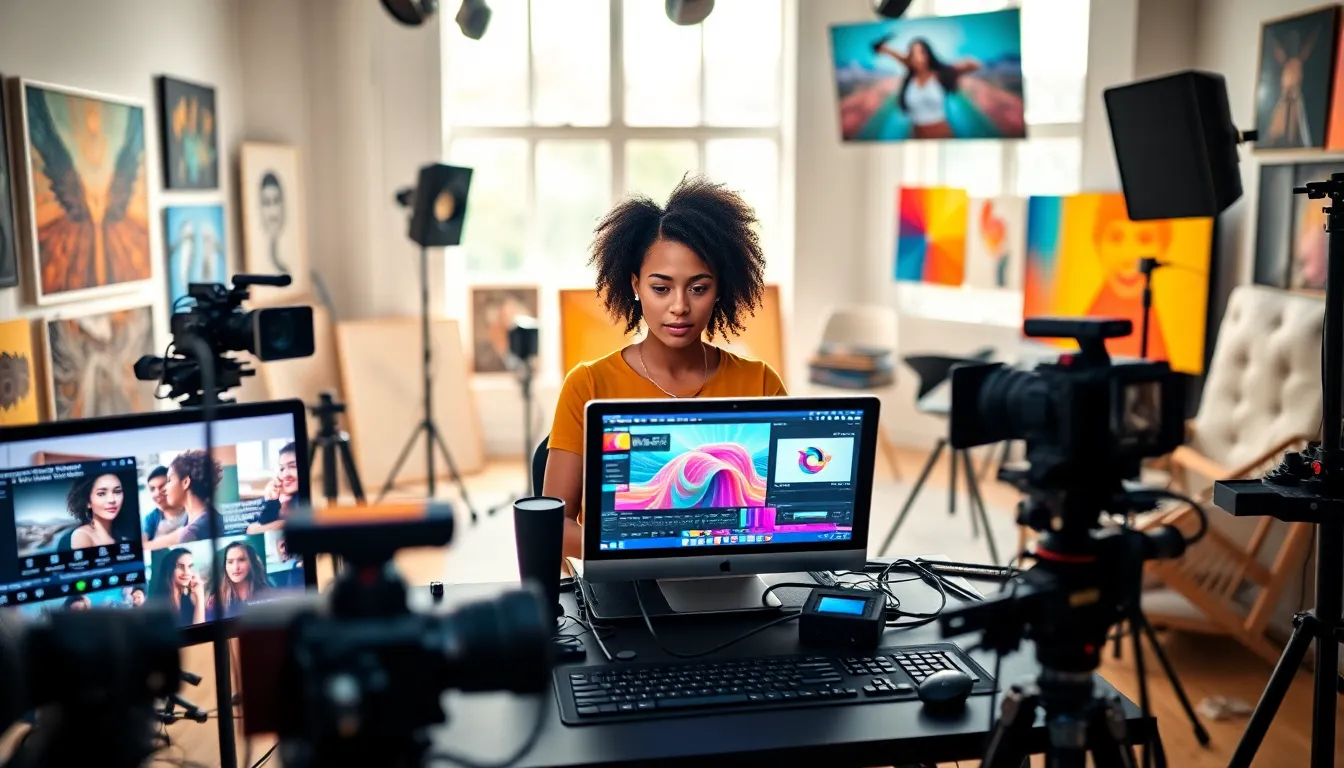
Arts and communications technology encompasses a vast landscape where creativity meets innovation. From the flicker of historical film reels to today’s 4K streaming videos, technology has always been a critical part of artistic expression. Modern artists are not just painters or sculptors: they’re also digital innovators, using various media to express thoughts and ideas.
This intersection allows for a rich tapestry of artistic endeavors. Consider how graphic designers employ software to create visually compelling content, or how filmmakers use cutting-edge cameras and editing tools to tell their stories. Both fields are transforming dramatically due to developments in audio/visual technology, reflecting cultural trends and technological advancements.
Efficient communication is another vital aspect of this convergence. Social media platforms and online galleries allow artists to share their work with a global audience in seconds. With apps that enable instant collaboration, artists can now connect with others across the world, leading to amazing partnerships and collaborations that wouldn’t have been possible just a few decades ago.
The Evolution Of Audio/Video Technology
The evolution of audio/video technology has been nothing short of revolutionary. It all began with rudimentary devices and has morphed into sophisticated systems that make our favorite entertainment experiences possible. Remember those days of cassette tapes? Now we can listen to music in lossless quality through streaming services. The introduction of digital video cameras turned the tides, giving rise to a new generation of filmmakers and content creators.
In the realm of video, the shift from analog to digital has changed how content is produced and consumed. Viewers now enjoy 4K streaming with exceptional clarity, thanks to technologies like HDR and surround sound. Smartphones equipped with advanced cameras can shoot and edit videos effortlessly, providing creators with tools that were once limited to major studios.
Also, platforms such as YouTube and TikTok have democratized media production. They empower anyone with a smartphone to share their creativity with the world, turning everyday individuals into influential content creators.
Impact Of Technology On Artistic Expression
Technology’s impact on artistic expression is profound and multifaceted. Artists are embracing new tools not just as means of creation but also as extensions of their artistic vision. Digital painting software allows visual artists to experiment endlessly without the constraints of traditional media. Musicians harness complex software to produce beats and compose symphonies that resonate emotionally with listeners.
Also, interactive installations in galleries are redefining how audiences experience art. Think of works that respond to viewers’ movements or touch. These installations can evoke emotions uniquely, making viewers an integral part of the art.
Art forms such as augmented and virtual reality bridge the gap between the viewer and the artwork, immersing participants in entirely new realms. This blending of technology and artistry allows for storytelling like never before, creating experiences that bubble with innovation.
Challenges And Opportunities In Arts Technology
With innovation comes a fair share of challenges. One significant issue is accessibility. Not every artist has the resources to invest in high-end technology, which creates a disparity in opportunities. While some can harness cutting-edge tools, others are left behind.
Also, the rapid pace of technological change can be overwhelming. Artists frequently need to adapt their skills to keep up with new tools and platforms. Yet, within this whirlwind of challenges lies a treasure trove of opportunities.
Emerging technologies, such as artificial intelligence and machine learning, provide artists with new ways to explore their creativity. For instance, AI algorithms can assist in generating unique visual content, allowing creators to push boundaries like never before. Also, online platforms enable artists to reach larger audiences than traditional gallery settings ever could. This shift leads to exciting collaborations and new opportunities for engagement with art.
Future Trends In Audio/Video Communications
Looking to the future, several trends are poised to shape the landscape of audio/video communications. One notable trend is the increasing shift towards immersive media, including virtual and augmented reality. Artists and creators will likely explore these formats more deeply, developing experiences that resonate on a sensory level.
Interactive content is also on the rise. Imagine watching a video where you can choose the story’s direction and outcomes. This trend could redefine how creators approach storytelling, offering audiences personalization and engagement.
Also, as artificial intelligence continues to develop, artists will find new innovative ways to use this technology. From AI-generated music to automatically edited videos, artists can harness these tools to augment their creativity rather than replace the unique human touch. The future holds immense potential to further integrate art and technology.

