
Imagine waking up to a home that knows you better than your best friend. Smart home technology has come a long way, transforming ordinary houses into futuristic havens of convenience and comfort. With a simple voice command or a tap on a screen, you can control everything from your lights to your coffee maker. It’s like having a personal assistant who never takes a day off—unless the Wi-Fi goes out, of course.
Overview of Smart Home Expansion
Smart home expansion refers to the integration of advanced technologies into residential settings, enhancing control and automation. This trend empowers homeowners with new ways to interact with their living environments.
Definition and Scope
Smart home expansion encompasses devices and systems that automate daily tasks, improving energy efficiency and convenience. Devices like thermostats, locks, cameras, and lighting systems connect to Wi-Fi, allowing users to manage them remotely. Integration often includes voice assistant compatibility, where users issue commands using simple phrases. The scope continues to broaden, incorporating features such as energy monitoring and security enhancements. Trends indicate growth in interoperability among devices, making smart homes more user-friendly and versatile.
Historical Context
The journey of smart home technology began in the late 20th century with the advent of simple automation systems. Early developments focused on basic remote controls for appliances. By the early 2000s, technological advancements introduced early smart devices, including programmable thermostats. Over the years, broader internet access and smartphone usage propelled smart home growth, leading to a surge in product offerings. The rise of voice assistants in the 2010s marked a significant turning point, making smart home management simpler. Current trends reflect a shift towards holistic smart home ecosystems, which aim to enhance user experiences and expand adoption.
Benefits of Smart Home Expansion
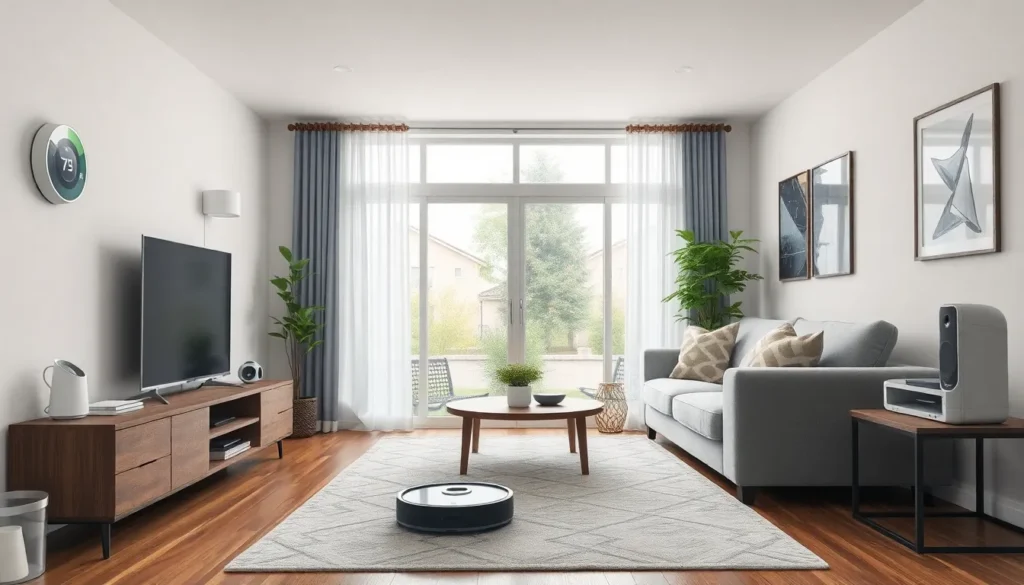
Smart home expansion offers significant advantages that enhance daily living. These benefits include enhanced convenience and improved security.
Enhanced Convenience
Smart home devices streamline various tasks, making home management simpler. Automated lighting adjusts based on occupancy, ensuring lights are never left on unnecessarily. Voice assistants control appliances and systems with easy commands, reducing time spent walking from room to room. Smart thermostats optimize heating and cooling schedules, maintaining comfortable temperatures while conserving energy. Homeowners can remotely manage cleaning devices, such as robotic vacuums, allowing them to focus on other activities. Overall, these conveniences save time and energy, creating a more relaxed living environment.
Improved Security
Smart home expansion greatly enhances residential security. Surveillance cameras provide real-time monitoring, allowing homeowners to check their properties from anywhere. Smart doorbells enable identification of visitors without opening the door. Motion sensors trigger alerts if unusual activity occurs, adding layers of protection. Smart locks grant remote access for trusted individuals, eliminating the need for physical keys. Integrating these features cultivates a sense of safety, significantly reducing the likelihood of break-ins. Homeowners enjoy peace of mind, knowing their homes are equipped with advanced security measures.
Challenges in Smart Home Expansion
Smart home expansion presents several challenges that can hinder its widespread adoption. Addressing these obstacles is crucial for maximizing the benefits of smart technology in residential settings.
Privacy Concerns
Privacy concerns pose significant challenges in smart home expansion. Users often hesitate to integrate smart devices due to fears of data breaches. Many devices collect personal information, making data security a top priority. Consumers worry that hackers may access sensitive data through connected devices. Trusting manufacturers requires assurance that robust security measures protect user information. Transparency about data usage and storage also plays a vital role in alleviating these fears. Homeowners seek to understand how their data is processed and stored to make informed decisions.
Integration Issues
Integration issues arise when attempting to connect various smart devices seamlessly. Compatibility between different brands and platforms often complicates user’s experiences. Many devices rely on specific ecosystems, making it difficult to achieve comprehensive automation. Users encounter frustration when trying to control devices through a single interface. Interoperability remains a key factor, as homeowners want devices to work together effortlessly. Establishing standards for communication among devices can enhance the overall smart home experience. Simplifying the setup process allows users to enjoy the benefits of smart technology without extensive technical knowledge.
Future Trends in Smart Home Expansion
Future trends in smart home expansion indicate a continued evolution of technology, enhancing homeowner interactions with their living spaces.
Emerging Technologies
Artificial intelligence significantly shapes smart home functionalities, enabling devices to learn from user behaviors and preferences. Internet of Things devices increasingly connect through enhanced networks, creating seamless interactions among gadgets. Voice recognition technology keeps advancing, allowing for more natural conversations with smart assistants. Augmented reality applications gain traction, providing immersive ways to visualize smart home setups and monitor system performance. Furthermore, energy-efficient solutions, such as solar-powered smart devices, contribute to sustainability goals while enhancing energy management.
Market Growth Predictions
Industry analysts forecast that the smart home market will reach $174 billion by 2025, reflecting a compound annual growth rate of over 25%. Increasing consumer demand for automation drives this growth, especially as younger generations prioritize convenience. Additionally, the rise of remote work heightens interest in home technology investments. Smart security systems continue to capture attention, expected to account for a significant share of market growth due to rising safety concerns. As manufacturers address privacy and compatibility issues, accelerated adoption remains assured, suggesting a vibrant future for smart home expansion.
Smart home expansion is reshaping how homeowners interact with their living spaces. With the integration of advanced technologies, daily tasks become more manageable and efficient. The focus on convenience and security not only enhances the quality of life but also addresses modern concerns about safety and energy use.
As the market continues to evolve, the potential for innovation remains vast. Future developments in artificial intelligence and the Internet of Things promise even greater advancements in smart home functionalities. By overcoming challenges related to privacy and compatibility, the smart home industry is poised for remarkable growth, making it an exciting time for homeowners to embrace this technological revolution.

